
Automatic doors are an excellent way to improve accessibility. So it’s no surprise that they’re a common sight in many healthcare settings. If you are recovering from an illness or healing from surgery, then the last thing you feel like doing is having to push open a heavy door.
Hospital automatic doors make life much easier for patients and their families. As well as health care staff, by eliminating the need to open and close doors manually. They also help your building to become compliant with The Equality Act. Which requires all public buildings to be accessible to people with disabilities.

There are several different types of automatic doors used in hospitals and healthcare facilities. Including automatic sliding doors, automatic swing doors, revolving doors, and bi-parting doors. Some of these types can be combined to create a custom system that meets the specific needs of the premises.
They can be controlled using a variety of methods but push buttons and motion sensors are most commonly found in healthcare settings. Each system has its own advantages, so it is important to choose one that will be the most effective for your building’s needs.

Types of Healthcare Facilities That Can Benefit from Automatic Doors
Automatic doors are a versatile solution to a wide range of accessibility problems. So many healthcare settings can benefit from their presence.
General Hospitals
Healthcare staff transporting patients from surgery to the recovery ward, or from one hospital department to another, will find automatic doors extremely helpful. Sliding or bi-parting doors are often used in these areas to make it easier to transport patients on a hospital bed, while swing and revolving doors can be used in lobbies.

Care Homes
Residents of care homes often have mobility issues that make it difficult for them to open traditional doors. Automatic doors can provide residents with the independence they need to move around the facility and help to prevent falls.
ICU Departments
Intensive care units are another area where automatic doors can be very beneficial. Sliding or bi-parting doors are often used to provide fast and easy access to vulnerable patients.
Birth Centres and Maternity Hospitals
New parents often have their hands full with a baby. So automatic doors can make life much easier for them when they are coming and going from the hospital. Most birth centres and maternity hospitals use push-button operated doors. As they are the most convenient for parents who are navigating exits while pushing a pram or holding a car seat.
GP Surgeries
Automatic doors can also be found in many GP surgery centres. They provide a convenient way for patients to enter and exit the building and help to prevent the spread of infection by minimising the number of surfaces that are touched.
Dental Clinics
Cross-contamination and hygiene control are a concern for many dental clinics. Automatic doors can play a key role in keeping patients safe by eliminating patient contact points. They also add a professional and modern touch to the reception area.
6 Reasons Why Healthcare Settings Should Have Automatic Doors
Automatic doors are an excellent way to improve the functionality and accessibility of any healthcare facility. Whether you are looking to improve the experience of patients. Staff or visitors, automatic doors are a versatile solution that can be tailored to the specific needs of each setting.
Here are 6 of the main reasons why healthcare and hospital automatic doors are such an important addition:
- Accessibility
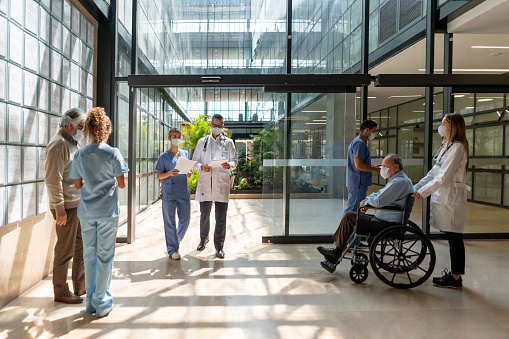
Accessibility will always be a prime concern for any kind of healthcare setting. Wheelchairs are common throughout any hospital, clinic, or care facility, and automatic doors allow these patients to have greater independence and mobility. Additionally, many healthcare facilities will transport patients on trollies and stretchers, which can be difficult to manoeuvre through standard doors.
Automatic doors make it much easier for staff to get patients in and out of a building. Helping them to receive the care they need more quickly and easily. This can be particularly crucial in any setting where timely care is essential. Such as in an emergency room or intensive care unit.
- Infection Control
In the wake of the COVID-19 pandemic, contamination and infection control have become top priorities for healthcare facilities around the world. Hospital automatic doors can help to reduce the spread of infection by minimising contact points and eliminating the need for door handles.
Studies have revealed that the novel coronavirus can survive on surfaces for anything from a few hours to a few days, depending on environmental conditions.
We already know that door handles harbour large numbers of bacteria. The more people who touch them, the greater the risk of contamination. And in healthcare settings such as a hospital. It’s not just COVID-19 that may pose a risk to patients – other harmful and highly resistant bacteria such as MRSA can spread this way too.
By having automatic doors in place. Healthcare facilities can significantly reduce their chances of spreading harmful pathogens from patient to patient and help to keep everyone safe.

- Safety and Security
In addition to helping prevent the spread of infectious diseases. Hospital automatic doors also play an important role in ensuring patient safety. These doors provide security against the admission of unauthorised personnel and can also help to prevent patients from wandering out of a facility if they become confused or disorientated.
In the event of a fire or other emergency. Hospital automatic doors can help to facilitate a quick escape route, allowing patients and staff to get out of a building quickly and safely. Automatic doors are also difficult to break into, so they provide an additional layer of security against potential intruders. This is essential when protecting vulnerable patients.
- Privacy and dignity
For many patients, particularly the elderly or vulnerable ones, maintaining privacy and dignity is a key consideration. Healthcare settings are inherently open and busy places, but hospital automatic doors can help to reduce the number of people who have access to a particular area and give staff more control over who can enter.
This extra level of privacy can be crucial in ensuring that patients feel safe, comfortable, and able to focus on their recovery without any undue stress.
- Convenience
Automatic doors can also offer a number of practical benefits to healthcare staff, by making their daily routines easier and more efficient. They make it quicker and easier for staff to move between different areas of a facility and can also help to reduce noise levels by eliminating the need for doors to be constantly opened and closed.
In a busy healthcare environment, every little time saving can make a big difference, and hospital automatic doors offer a convenient solution that helps to streamline daily operations.
- Traffic Control
In any busy healthcare facility, traffic control is a major consideration. Automatic doors can help to manage the flow of people in and out of an area, preventing bottlenecks and overcrowding in waiting rooms or other areas.
They can also make it easier for patients to get to their appointments, by providing clear and unobstructed access. This can help to reduce waiting times and make the overall patient experience more efficient and convenient.
Finding the Right Automatic Door Specialist
Hospitals and healthcare facilities have automatic doors because they are a simple, effective way to improve accessibility for all. They help patients and their families to move around the building more easily, which can ease the stress of being in a hospital.
Hospital automatic doors also help to meet the needs of people with disabilities, which is essential under The Equality Act. So, if you are looking for a way to make your healthcare facility more accessible, then automatic doors for healthcare facilities are the way forward.
However, it’s important to choose a professional who specialises in the installation of automatic doors in this setting. There are unique considerations when it comes to installing an automatic door in a healthcare facility. So it’s important to work with a company that has experience and expertise in this area. For example, your facility may benefit from a specialised trackless automatic door that can minimise the build-up of contaminants in the guide track.
Access control is also an essential feature in many healthcare settings. So it’s important to choose a company that can install a door that can be integrated with existing security systems.
J Manny
At J Manny, we have extensive experience in the installation of automatic doors for hospitals and healthcare facilities. We work with a range of different door types. Including swing doors and sliding doors, and offer a full range of installation options to suit your specific needs.
Our experienced team will be happy to work with you to find the right solution for your healthcare facility. We can also provide ongoing automatic door maintenance and servicing to keep your doors in perfect working order.
If you would like to find out more about our services, or if you need any advice on choosing the right automatic door for your healthcare facility, then please don’t hesitate to get in touch. We’d be happy to help!